|

The field of “green technology ” encompasses a broad range of subjects — from new energy-generation techniques to the study of advanced materials to be used in our daily life. Green technology focuses on reducing the environmental impact of industrial processes and innovative technologies caused by the Earth’s growing population. It has taken upon itself the goal to provide society’s needs in ways that do not damage or deplete natural resources. Mainly this means creating fully recyclable products, reducing pollution, proposing alternative technologies in various fields, and creating a center of economic activity around technologies that benefit the environment.
|

Perhaps the most talked about aspect of green technology is the promise of alternative energy sources. Sun, wind, water, sugar — we’ve heard about them all. However, scientists are working on other aspects of the problem as well, testing building materials and studying chemical processes to reduce the use and generation of hazardous substances. Nanotechnology is also being used in an attempt to manipulate materials at the nanometer scale; scientists are hoping it can transform manufacturing on a global level, from government purchasing to a technological revolution.
The huge amount of computing manufactured worldwide has a direct impact on environment issues, and scientists are conducting numerous studies in order to reduce the negative impact of computing technology on our natural resources. Companies are addressing e-waste by offering take-back recycling programs and other solutions, with lower energy consumption and less wasted hardware. A central point of research is testing and applying alternative nonhazardous materials in the products’ manufacturing process. Although the use cases for green computing are diverse, one method is that is being tested is green datacenters.
VIA Technologies Green Computing
VIA Technologies, a Taiwanese company that manufactures motherboard chipsets, CPUs, and other computer hardware, introduced its initiative for “green computing” in 2001. With this green vision, the company has been focusing on power efficiency throughout the design and manufacturing process of its products. Its environmentally friendly products are manufactured using a range of clean-computing strategies, and the company is striving to educate markets on the benefits of green computing for the sake of the environment, as well as productivity and overall user experience.
Carbon-free computing
|

One of the VIA Technologies’ ideas is to reduce the “carbon footprint” of users — the amount of greenhouse gases produced, measured in units of carbon dioxide (CO2). Greenhouse gases naturally blanket the Earth and are responsible for its more or less stable temperature. An increase in the concentration of the main greenhouse gases — carbon dioxide, methane, nitrous oxide, and fluorocarbons — is believed to be responsible for Earth’s increasing temperature, which could lead to severe floods and droughts, rising sea levels, and other environmental effects, affecting both life and the world’s economy. After the 1997 Kyoto Protocol for the United Nations Framework Convention on Climate Change, the world has finally taken the first step in reducing emissions. The emissions are mainly a result of fossil-fuel-burning power plants. (In the United States, such electricity generation is responsible for 38 percent of the country’s carbon dioxide emissions.)
VIA aims to offer the world’s first PC products certified carbon free, taking responsibility for the amounts of CO2 they emit. The company works with environmental experts to calculate the electricity used by the device over its lifetime, generally three years. From this data, one can conclude how much carbon dioxide the device will emit into the atmosphere during its operation. This estimate will serve as an indicator, and the company will pay regional organizations for the “sequestering,” or offsetting, of the emissions. Offsetting carbon dioxide can be achieved in different ways. One way is to plant trees that absorb CO2 as they grow, in the region in which the processors were purchased. The necessary amount of trees per processor is represented by VIA’s TreeMark rating system.
In addition, VIA promotes the use of such alternative energy sources as solar power, so power plants wouldn’t need to burn as much fossil fuels, reducing the amount of energy used. Wetlands also provide a great service in sequestering some of the carbon dioxide emitted into the atmosphere. Although they make up only 4 to 6 percent of the Earth’s landmass, wetlands are capable of absorbing 20 to 25 percent of the atmospheric carbon dioxide. VIA is working closely with organizations responsible for preserving wetlands and other natural habitats, and others who support extensive recycling programs for ICT equipment. The amount paid to these organizations will be represented by a proportion of the carbon-free product’s price.
Carbon-emissions control has been a key issue for many companies who have expressed a firm commitment to sustainability. Dell is a good example of a company with a green image, known for its free worldwide product-recycling program. Dell’s Plant a Tree for Me project allows customers to offset their carbon emissions by paying an extra $2 to $4, depending on the product purchased. AMD, a global microprocessor manufacturer, is also working toward reducing energy consumption in its products, cutting back on hazardous waste and reducing its eco-impact. The company’s use of silicon-on-insulator (SOI) technology in its manufacturing, and strained silicon capping films on transistors (known as “dual stress liner” technology), have contributed to reduced power consumption in its products.
Solar Computing
|

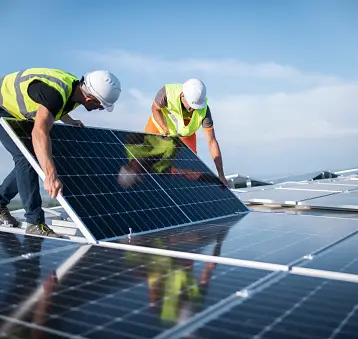
Amid the international race toward alternative-energy sources, VIA is setting its eyes on the sun, and the company’s Solar Computing initiative is a significant part of its green-computing projects. For that purpose, VIA partnered with Motech Industries, one of the largest producers of solar cells worldwide. Solar cells fit VIA’s power-efficient silicon, platform, and system technologies and enable the company to develop fully solar-powered devices that are nonpolluting, silent, and highly reliable. Solar cells require very little maintenance throughout their lifetime, and once initial installation costs are covered, they provide energy at virtually no cost. Worldwide production of solar cells has increased rapidly over the last few years; and as more governments begin to recognize the benefits of solar power, and the development of photovoltaic technologies goes on, costs are expected to continue to decline. As part of VIA’s “pc-1” initiative, the company established the first-ever solar-powered cyber community center in the South Pacific, powered entirely by solar technology.
Lead-Free and RoHS computing
In February 2003, the European Union adopted the Restriction of Hazardous Substances Directive (RoHS). The legislation restricts the use of six hazardous materials in the manufacture of various types of electronic and electrical equipment. The directive is closely linked with the Waste Electrical and Electronic Equipment Directive (WEEE), which sets collection, recycling, and recovery targets for electrical goods and is part of a legislative initiative that aims to reduce the huge amounts of toxic e-waste. Driven by these directives, VIA implemented a set of internal regulations in order to develop products that are compliant with these accepted policies, including the use of nonhazardous materials in its production of chipsets, processors, and companion chips. In 2001, they focused on lead-free manufacturing, introducing the Enhanced Ball Grid Array (EBGA) package for power efficient VIA processors and the Heat Sink Ball Grid Array (HSBGA) package for their chipsets. In traditional manufacturing processes, lead is used to attach the silicon core to the inside of the package and to facilitate integration onto the motherboard through tiny solder balls on the underside of the package. VIA’s lead-free manufacturing technologies do not require a lead bead, and the solder balls now consist of a tin, silver, and copper composite.
However, not everyone is satisfied with this new objective. Howard Johnson of the online EDN magazine says that the move toward lead-free devices is not only unhelpful but actually worse for the environment. “The additional tin mining required to produce high-purity tin alloys, plus the mining of other precious metals required to alloy with tin in substitution for lead, is a poor trade for the use of existing lead, much of which comes from recycled products,” Johnson writes. He also believes that lead-free assembly is less reliable than lead-based assembly, partially due to the increased growth of tin whiskers — small, hair-like metallic growths that naturally emerge from the surface of solid tin. On lead-free tin surfaces, these whiskers can grow to a length sufficient to short an electronic circuit to another, leading to product failure.
Energy-efficient computing
A central goal of VIA’s green-computing initiative is the development of energy-efficient platforms for low-power, small-form-factor (SFF) computing devices. In 2005, the company introduced the VIA C7-M and VIA C7 processors that have a maximum power consumption of 20W at 2.0GHz and an average power consumption of 1W. These energy-efficient processors produce over four times less carbon during their operation and can be efficiently embedded in solar-powered devices.
VIA isn’t the only company to address environmental concerns: Intel, the world’s largest semiconductor maker, revealed eco-friendly products at a recent conference in London. The company uses virtualization software, a technique that enables Intel to combine several physical systems into a virtual machine that runs on a single, powerful base system, thus significantly reducing power consumption. Earlier this year, Intel joined Google, Microsoft, and other companies in the launch of the Climate Savers Computing Initiative that commits businesses to meet the Environmental Protection Agency’s Energy Star guidelines for energy-efficient devices.
Kevin Fisher, Intel’s EU standards director, says that while the company is dedicated to its green-computing plans, it is important to not blame the IT industry alone for carbon emissions worldwide. He argues that the industry also helps in saving huge amounts of power due to the Internet, enabling, for example, online shopping and billing.
Governments go green
|

Many governments worldwide have initiated energy-management programs, such as Energy Star, an international standard for energy-efficient electronic equipment that was created by the United States Environmental Protection Agency in 1992 and has now been adopted by several other countries. Energy Star reduces the amount of energy consumed by a product by automatically switching it into “sleep” mode when not in use or reducing the amount of power used by a product when in “standby” mode. Surprisingly, standby “leaking,” the electricity consumed by appliances when they are switched off, can represent as much as 12 percent of a typical household’s electricity consumption. In Australia, standby power is a primary factor for the country’s increased greenhouse gas emissions — more than 5 megatons (CO2 equivalent) annually.
Worldwide, standby power is estimated to account for as much as 1 percent of global greenhouse emissions. Most of the energy used by products on standby does not result any useful function. A small amount can be needed for maintaining memory or an internal clock, remote-control activation, or other features; but most standby power is wasted energy. Energy Star–enabled products minimize this waste.
In 1998, the China National Development and Reform Commission (NDRC) founded the China Energy Conservation Program (CECP), a nonprofit organization in charge of the administration, management, and implementation of the certification for energy- conserving, water-saving, and environmentally friendly products. CECP is dedicated to encouraging manufacturers to produce more resource-efficient products and help consumers make more sustainable purchase decisions. CECP undertakes various projects within the national and the international arena, actively supporting improvements in energy efficiency and environmental protection and assisting social and economic sustainable development. In Japan, the Energy Conservation Center is responsible for raising public awareness on energy conservation, training and state examinations for energy managers, and their energy-conservation campaign and exhibition (ENEX).
On the horizon
Green technology is gaining more and more public attention through the work of environmental organizations and government initiatives. VIA is one of the first corporations to concentrate on green computing that seems less a passing trend than a first step toward significant changes in technology. In May 2007, IBM unveiled its Project Big Green, dedicated to increasing energy efficiency across the company’s branches around the world. Experts say that businesses will continue to invest in clean computing, not only because of future regulations, policies, and social demands to reduce their carbon footprint, but also due to the significant long-term savings it can make.
|

Several companies are already headfirst into the green-computing business. Located in the Silicon Valley and founded in 2006, Zonbu was the first company to introduce a completely environmentally responsible computer – Their “Zonbox” computer is a carbon-emission neutral computer, thanks to a low-power design and regulatory-grade carbon offsets. The device, which complies both to Energy Star standards and the Restriction of Hazardous Substances Directive (RoHS), consumes only 15W, compared to the 175W consumed by a typical desktop PC. Zonbu also provides a free take-back program to minimize environmental e-waste.
Another American company, Everex, has released the Impact GC3502, a green PC that uses 20W of power, owing to a 1.5GHz VIA C7-D processor.
VIA: vision through the pc-1 initiative
VIA isn’t focusing only on the technological aspects of its eco-friendly devices, it’s also taking a look at their applications. The VIA pc-1 initiative seeks to enable the next 1 billion people to get connected, by providing wider access to computing and communications technologies. The company is concentrating on empowering new, emerging markets, looking at models that reach beyond individual ownership of a PC, such as local pay-for-use facilities. Products built for such a use are characterized by ultra-efficient energy consumption and the ability to withstand heat and dust in harsh environments. In VIA’s own words:
“Pc-1 brings together business ingenuity with corporate responsibility and altruism. Helping to build skills and literacy throughout the world and incorporating and preserving cultural content are goals now within our grasp. Information is the oxygen to nurturing social mobility, economic equality and development, and global democracy. Providing not just the tools and the know-how, but the support and the maintenance, is all part of what makes pc-1 the next generation of information technology, the next generation of global development”.
Among the company’s projects under the pc-1 program are the “tuXlab” computer center in South Africa and an ICT Training Center in Vietnam.
Green Interview with VIA
TFOT recently interviewed Gaynor de Wit, deputy director of processor platform marketing at VIA Technologies, to learn more about the company’s green-technology initiative and future plans.
Q: Can you describe when and why VIA decided to “go green”?
A: Early on, VIA recognized that massive adoption of computing technology on a global scale had the potential to result not only in the creation of vast amounts of waste material when components became obsolete, but also in significant stresses on existing power-supply infrastructures. With this in mind, in 2001 we opted to take an approach to product design that factored in the impact its products and processes might have on the environment.
Since the introduction of the VIA C3 processor in 2001, we have led the industry in the design of energy-efficient x86 platforms. From thin clients to laptops to industrial computing systems, VIA processor platforms have built a reputation for leading performance per watt and cool operation.
With the challenges presented by the forward-thinking European Union directives on the Restriction of Hazardous Substances (RoHS) and Waste Electrical and Electronic Equipment (WEEE), VIA implemented internal procedures that ensured a smooth transition for the development of RoHS-compliant products.
While the RoHS directive came into effect in July 2006, VIA’s move toward lead-free manufacturing started much earlier, with the introduction of the Enhanced Ball Grid Array (EBGA) package for its processors and the Heat Sink Ball Grid Array (HSBGA) package for its chipsets. In fact, VIA has been shipping lead-free VIA Eden and C3 processor platforms into the market since the end of 2003, with the current VIA C7 processor family lead-free at launch in 2005.
With the launch of the VIA C7-D processor in late 2006, we’re seeking to define a new era in eco-friendly computing, and to further heighten awareness of computing’s impact on the environment. Conceived as the ideal desktop processor for corporations seeking to significantly save on their power bills, while delivering the performance and reliability needed for productivity applications, the VIA C7-D processor is the world’s first computer component to be sold as carbon-free.
Q: Does green computing reduce costs for VIA in the short term as well as the long?
A: One of the great things about green computing is that it’s not just a more sustainable, environmentally friendly approach to computing; it also means very real savings in dollar terms. With office equipment currently accounting for up to 20 percent of total energy output and the fastest-growing area of energy use, a large company like VIA can cut costs enormously by utilizing energy-efficient, green-computing technologies.
And the savings don’t stop at lower power consumption through more efficient components. Cooler-running systems don’t heat up office spaces to the same extent, enabling significant air-conditioning cost reductions. Additionally, cooler components extend the useful life of hardware, further reducing costs. The business case for saving energy is very clear.
But green computing extends out of the data center and the desktop, encompassingsuchmobility issues as encouraging work from home and video conferencing that discourages travel. VIA is a global organization of nearly 3000 people, with engineering teams needing to collaborate regularly, so there are significant financial savings as well as lower carbon emissions that can had through reduced travel. As technology improves, that’s been easier to achieve, and to this end we have an in-house videoconferencing suite that has gone a long way toward cutting back on costs.
Q: What obstacles do you face, in research or development, with your environment-friendly products?
A: Our leadership in energy efficiency, miniaturization, and integration at the silicon and board level is a testament to VIA’s R&D capabilities.
On the design side, ensuring energy efficiency in IC chips requires a keen focus on reducing voltage, while retaining performance and enabling our signature rich-feature integration within ever-smaller packages. This is not a simple process and demands high levels of skilled engineering, which is why, to this day, we can offer the lowest power-consuming embedded, notebook, and desktop processors in the world.
Achieving such high levels of energy efficiency and low heat production also allows us to build smaller, which in turn allows our partners to build smaller systems, providing savings for consumers not only in terms of power requirements but also in disposal costs. For portable systems, such as the new generation of ultra-mobile devices, this also means longer battery life, an essential element of ultra-mobility Other companies cannot achieve this, as their chips consume too much power and emit too much heat.
On the manufacturing side, the removal of hazardous substances raises several technical challenges, especially the replacement of lead as a stable solder substance. However, an aggressive approach to the problem, starting five to six years ago, allowed our engineers the time to experiment with effective replacement alloys, so that our processor platforms were effectively manufactured lead-free long before the industry was mandated to do so.
Q: How would you respond to critics who claim that lead-free products are dangerous and unreliable?
A: This has become a hot topic in the wake of the recent RoHS directive. The issue is that lead-free solders have higher melting points than traditional tin-and-lead solder. Lead has been used in solders for hundreds of years because tin-and-lead solders have a low melting point, are easy to use, and give reliable solder joints. The argument is that most useful alternative alloys have higher melting temperatures, which can cause damage to laminate and to heat-sensitive components and raise concerns about stresses put on components. This unreliability can become dangerous in systems people rely on, such as medical devices, and can cost lives. Such reliability concerns have kept manufacturers from transitioning to lead-free soldering, and exemptions for certain industries (for example, aerospace, military, and computer-server products) have been taken as a tacit admission that lead-free is unreliable.
The fact is, lead-free components and manufacturing processes can be completely safe and reliable. VIA, and other companies who have been lead-free for a while, are in a good position, because we have already worked through the transition problems. Everyone else is just going through it now, which is why we’re hearing so much about it.
Not all lead-free soldering is the same. Some alloys are better than others, and some temperatures work better than others. For many companies, there will be an element of trial and error in discovering what works best for them. Certainly, we’ve seen real advances in the last few years with some electronics manufacturers offering lead-free soldering that rivals their leaded counterparts in reliability. We feel comfortable that criticism will die away as companies progress through the transition, and this is being borne out already by the European Union’s removal of several of the exemptions to the RoHS directive.
Q: How do you see VIA’s green-initiative progress in the future?
A: VIA will continue to innovate in the x86 platform space and push forward with more power-efficient, smaller-form-factor components. Since it’s not just businesses that should be aware of the impact of their computing activity; this includes taking our green-computing message into new settings and product areas. So, for example, we’ll be attending the Green California School Summit in Pasadena, California, in December to showcase low-power client-servers and ultra-mobile devices for the education market, and there will be other events that help get the message across.
We’ll also continue to work closely with organizations and companies involved with renewable energies in an effort to develop more sustainable computing platforms.
At VIA, we believe that the computing device you’ll be using in the future will be very different from the one you’re using today. Devices are using less and less power at the same time as renewable energy is getting more and more portable and effective. The materials computers are made from are becoming less hazardous. At the end of the road will be a computer that not only connects us to the world through information technology using renewable energy, but is also constructed through a cycle of manufacturing that doesn’t hurt us or future generations. How long that road is isn’t clear at the moment, but VIA intends to continue to lead the way forward through its green-computing initiative.